

Tutte le skill
Personale
Dai vincoli al piano giorno per giorno
I vincoli del viaggio diventano un piano giorno per giorno con margini e budget.
La demo usa dati fittizi. L'output mostrato è quello prodotto dalla skill con quell'input di esempio.
Provala in 3 passaggi
- 01
Copia la cartella, o solo SKILL.md, in .claude/skills/ nel tuo progetto (oppure in ~/.claude/skills/ per usarla ovunque).
- 02
Apri Claude Code e chiedila per nome, ad esempio: Usa la skill travel-itinerary sui miei file.
- 03
Controlla il risultato. Le skill creano un nuovo file e non sovrascrivono mai i tuoi.
Guarda un esempio di esecuzione
Input di esempio · input.md
# Trip request

- Destination: Porto, Portugal
- Dates: Thu 12 Nov to Sun 15 Nov 2026 (arrive Thursday late morning, leave Sunday evening)
- Travellers: 1 adult, me
- Budget: 800 EUR total, not counting flights
- Interests: tiles and old buildings, food markets, river views, one museum
- Pace: relaxed, I get tired with more than two main things a day
- Stay: a small guesthouse near the centre, 3 nights
- Must have: a long lunch every day, one early night
- Avoid: long queues, night buses
Output di esempio · output.md
# Porto: Thu 12 Nov to Sun 15 Nov 2026
Pace: relaxed (two main things a day at most). Budget: 800 EUR, flights not included.

## Budget split (your numbers to adjust)
These are shares of your budget, not quoted prices. Check real prices before you book.

| Category | Share | Amount | Per unit |
|---|---|---|---|
| Stay (3 nights) | 40% | 320 EUR | about 107 per night |
| Food | 25% | 200 EUR | about 50 per day |
| Local transport | 10% | 80 EUR | about 20 per day |
| Activities | 15% | 120 EUR | - |
| Reserve | 10% | 80 EUR | - |

## Day 1, Thu 12 Nov (arrival)
- Late morning: arrive, drop bags at the guesthouse. Check: check-in and bag-drop times.
- Lunch (long): a simple place near the centre. Check: opening hours and prices.
- Afternoon, main thing 1: slow walk through the old centre to look at tiled buildings.
- Buffer: rest at the guesthouse.
- Evening: relaxed dinner nearby.

## Day 2, Fri 13 Nov
- Morning, main thing 1: the museum you chose. Check: opening hours, ticket price, whether timed tickets avoid queues.
- Lunch (long): close to the museum.
- Buffer: free hour, coffee, sit down.
- Afternoon, main thing 2: riverside walk. Check: how long the walk is for your energy.
- Evening: free.

## Day 3, Sat 14 Nov
- Morning, main thing 1: a covered food market. Check: opening hours, which days stalls are open.
- Lunch (long): eat at or near the market. Check: prices.
- Buffer: back to the guesthouse for a break.
- Late afternoon, main thing 2: a viewpoint across the river for the light. Check: sunset time and how to get there.
- Early night, as you asked.

## Day 4, Sun 15 Nov (departure evening)
- Morning: slow breakfast, pack, leave bags. Check: bag storage after check-out.
- Main thing (optional): one more tiled building near the guesthouse.
- Lunch (long).
- Buffer: leave a full hour before heading to the airport or station.
- Evening: travel. Check: a daytime or early-evening option, as you avoid night buses.

## Before you go
- Check opening hours and prices for every item marked Check.
- Book the guesthouse and transport yourself; nothing here is booked.
- Check entry rules and local weather for the dates.
La skill · SKILL.md
---
name: travel-itinerary
description: Turns trip constraints (dates, budget, interests, pace) into a day-by-day itinerary with buffers, a rough budget split and "check opening hours and prices" notes. Use when someone wants a draft trip plan to refine. Never states prices, opening hours or availability as facts and never books anything.
---
# Travel Itinerary
Your dates and wishes become a relaxed day-by-day draft you can verify and book yourself.

## When to use
- The user has a destination and dates and wants a first-draft plan.
- The user wants the budget split sensibly before looking at real prices.

## Inputs
- Destination, exact dates, arrival and departure times, number of travellers.
- Total budget and what it excludes (for example flights). Ask if unclear.
- Interests, pace (relaxed / normal / packed), must-haves and things to avoid.

## Steps
1. List the usable days. Arrival and departure days are partial: plan fewer things on them.
2. Set the daily load from the pace: relaxed = at most two main activities, normal = three, packed = four. Add a meal block and a buffer block every day.
3. Split the budget across stay, food, local transport, activities and a 10% reserve. Use percentages the user can change and compute amounts with code. Label them "budget split", not prices.
4. Group activities by area so days do not zigzag. Use well-known kinds of places from the interests; name a specific venue only if the user named it, otherwise write a type such as "a covered food market".
5. Put the user's must-haves in first (long lunch, early night), then the interests.
6. After each activity add "Check: opening hours, price, booking needed".
7. Add a short "Before you go" list: things to check or book yourself.

## Output
Write a new file `itinerary.md` next to the input (if it exists, use `itinerary-2.md`). Never overwrite the input. Template:
```
# <Destination>: <dates>
Pace: <pace>. Budget: <total> (<what it excludes>)
## Budget split (your numbers to adjust)
| Category | Share | Amount | Per day |
## Day 1 <date>
- Morning / Lunch / Afternoon / Buffer / Evening
  - Check: ...
## Before you go
```

## Rules
- Never invent prices, opening hours, availability, transport times or events; write "check" instead.
- Never book, reserve or pay for anything; the user does that.
- Budget figures are the user's allocation, not quotes. Say so.
- Every day keeps a buffer block and respects the stated pace.
- Ask before assuming unclear dates, budget scope or mobility needs.
- Write results to a new file, never overwrite the user's files.
- Keep the user's data local.
- Out of scope: visa, health, insurance or legal advice; point to official sources to check.
Le skill ti aiutano a leggere e organizzare. Non sono consulenza legale, medica, fiscale o finanziaria.
Altre skill
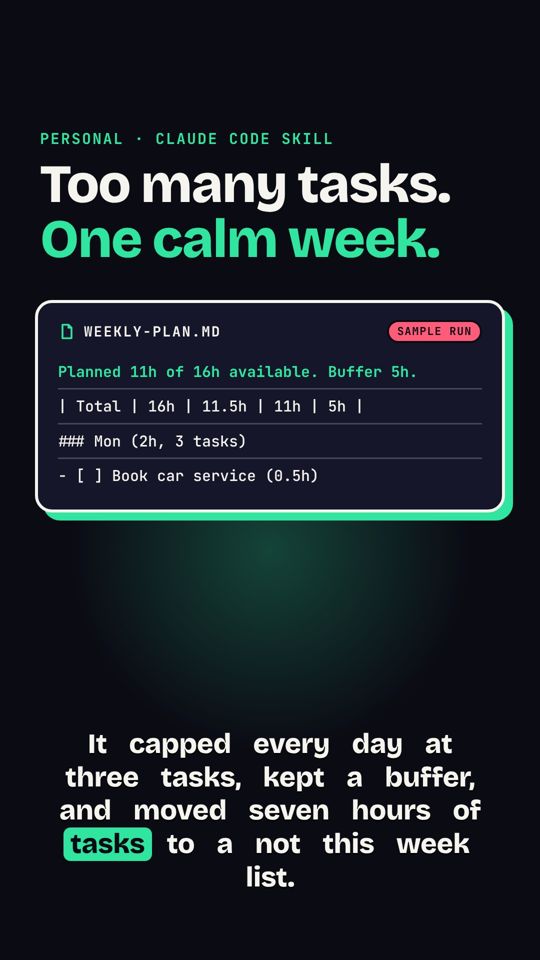 Da lista caotica a piano settimanaleUna lista di attività caotica diventa un piano settimanale sereno, tre cose al giorno.
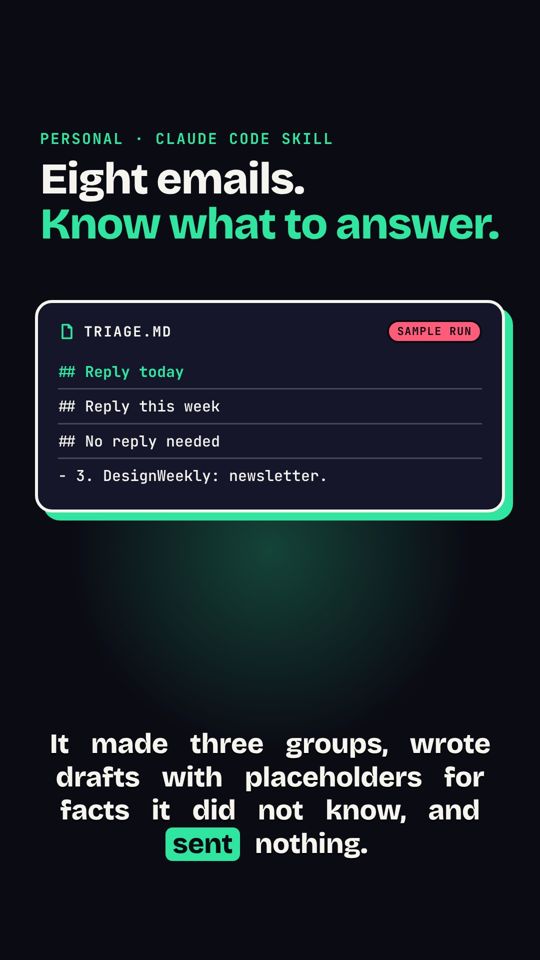 Email in priorità e bozzeLe email incollate diventano un elenco di priorità con bozze di risposta.
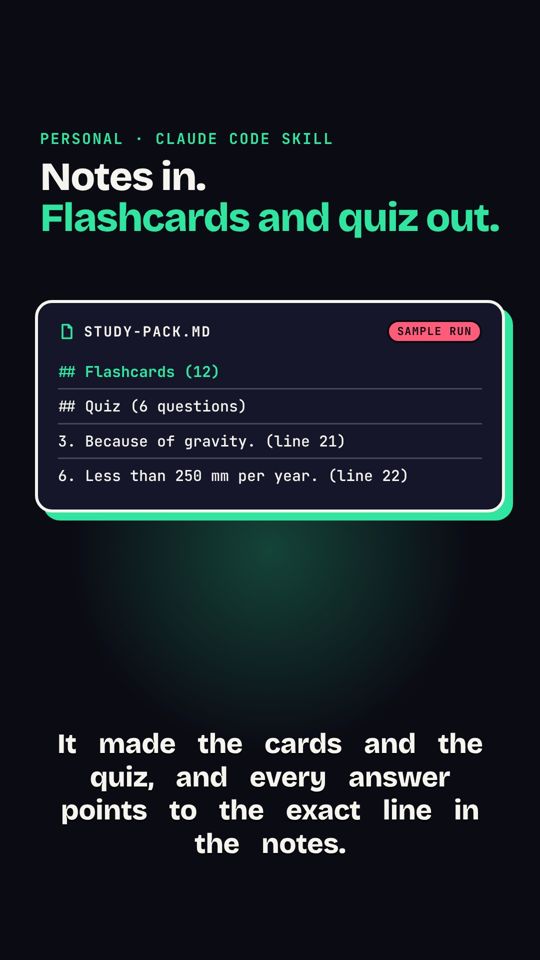 Appunti di studio in flashcard e quizGli appunti di studio diventano flashcard e un breve quiz.